A Built-In Fridge Costs Twice as Much Per Litre
A built-in and a freestanding fridge-freezer differ by just 8 EUR, yet the freestanding one holds 538 litres to 248. Built-in costs double per litre.
By Nora Fischer · Last updated 16 August 2026
Researched and drafted with AI language-model assistance from CompareHomeAppliances' own verified spec database and cited public sources, per our AI-content disclosure.
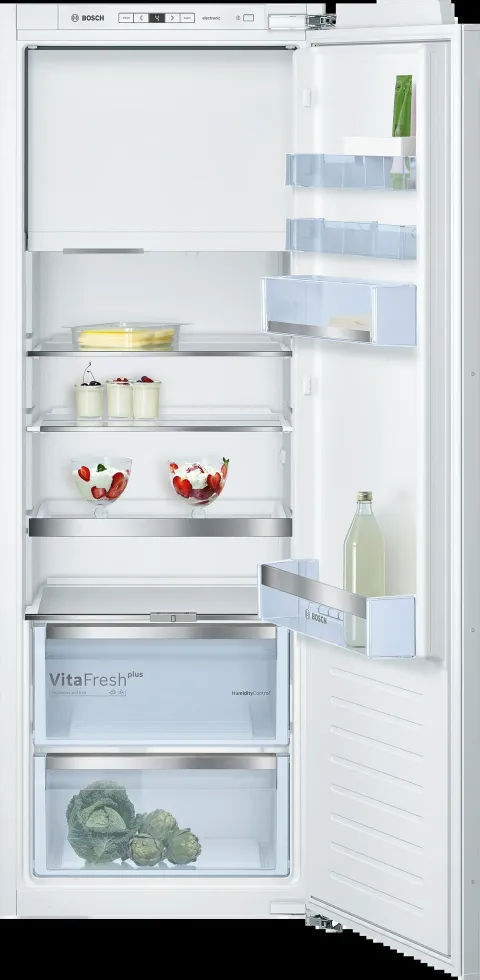
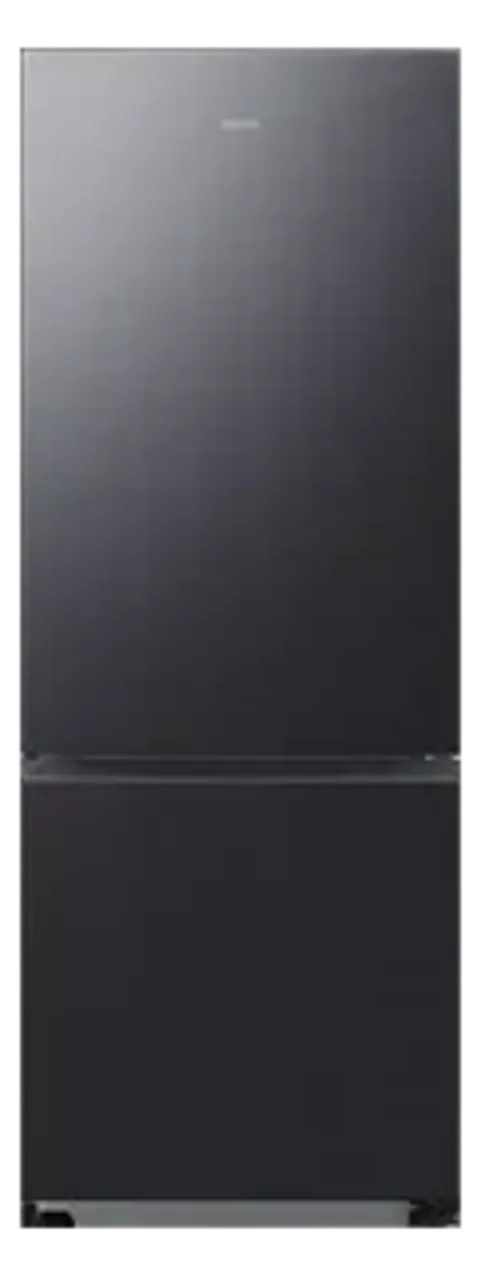
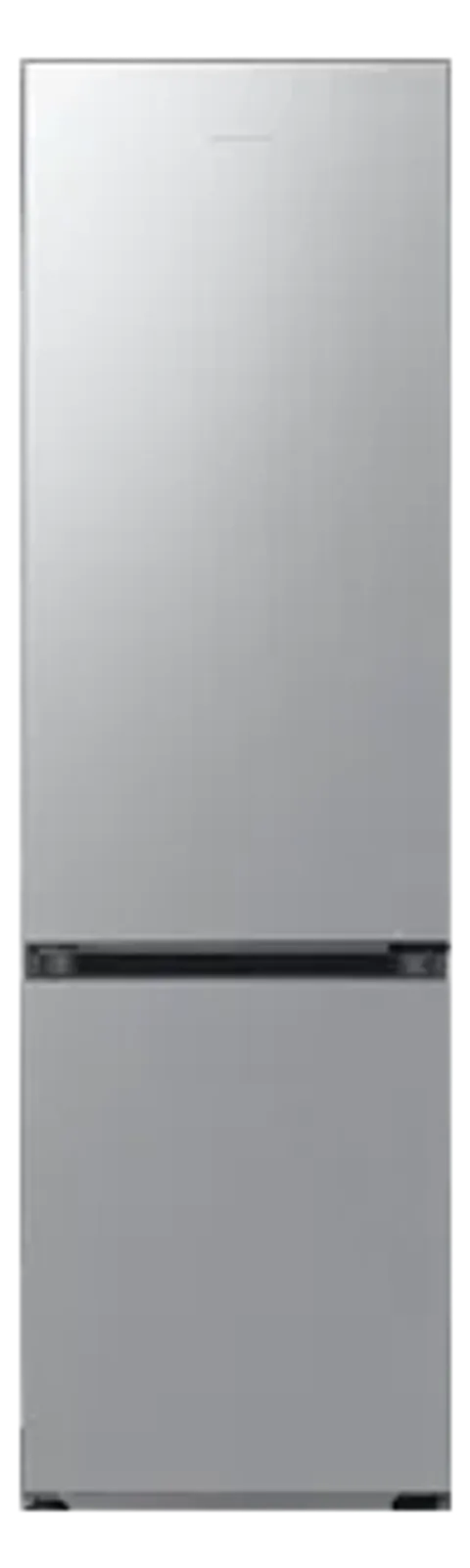
Renovating a kitchen usually comes down to one fitted-versus-freestanding decision for the fridge, and here is a pair worth sitting with before you make it. The Bosch Serie 6 KIL72AFE0, a built-in fridge-freezer meant to disappear behind a cabinet door, is 1,329 EUR and holds 248 litres total. The Samsung RB6000D RB53DG706AB1EF, a freestanding model that stands in the open, is 1,337 EUR, eight euros more, and holds 538 litres, more than double the space. Same price, roughly. Not remotely the same capacity. If you are choosing between built-in and freestanding for a renovation, that eight-euro gap next to a 290-litre gap is the number that should shape the decision, not the fitted-kitchen look on its own.
Key takeaways:
- The Bosch Serie 6 KIL72AFE0 (built-in, 1,329 EUR, 248 L) and Samsung RB6000D RB53DG706AB1EF (freestanding, 1,337 EUR, 538 L) differ by 8 EUR (0.6 percent) in price but 290 L (116.9 percent) in total volume.
- Across 66 fridge-freezers in our database with price, volume and installation type recorded, built-in models cost a median 4.79 EUR per litre against 2.33 EUR per litre for freestanding models, roughly double.
- Cabinet width changes the math sharply within built-in alone: narrow 54 to 56cm slots run 5.47 EUR per litre (n=18) while 60cm-plus openings run 2.92 EUR per litre (n=9), so a wider opening removes most of the built-in premium.
- 94.4 percent of narrow built-in fridges (17 of 18) carry an energy class of D or E, against 10.5 percent (4 of 38) of freestanding models, a pattern worth checking per model rather than assuming.
- Noise does not explain any of it: built-in and freestanding average 34.8 dB and 34.9 dB respectively, essentially identical.
Same price, so why is one fridge half the size?
The Bosch and the Samsung are not a cherry-picked oddity, they sit close together in price because that is roughly where a mid-range fridge-freezer lands in either format. What separates them is what happens once you decide to hide the appliance behind cabinetry. The Bosch Serie 6 KIL72AFE0 is built to fit a 55.8cm-wide, 157.8cm-tall cabinet opening, a common integrated slot, according to its own product page. That constraint caps its interior at 214 litres of fridge space plus 34 litres of freezer, 248 litres total. The Samsung RB6000D RB53DG706AB1EF, freestanding, answers to no cabinet opening at all, and its 370 litres of fridge plus 168 litres of freezer add up to 538.
Two hundred ninety litres is an abstract number until you picture it differently: it is more extra space than the entire Bosch built-in holds to begin with. You could fit a second, smaller fridge into the room the Samsung’s extra capacity buys, for eight euros of total price difference between the two.
There is a second, honest gap sitting alongside the size gap that this pair also shows: the Bosch is rated energy class E, the Samsung is rated A. That is a real difference in running cost, not a rounding error, and it is not caused by the size gap or vice versa. Keep the two facts separate. A shopper choosing built-in here is trading away both capacity and (in this pairing) energy class for roughly the same money, and should know that going in rather than discover it on the first electricity bill.
Does the built-in premium hold up across the wider catalog, not just this one pair?
It does, and it is not close. Sixty-six fridge-freezers in our database publish a price, a total volume and an installation type. Built-in models (n=28) have a median price of 1,154 EUR and a median total volume of 270 litres, which works out to 4.79 EUR per litre. Freestanding models (n=38) have a median price of 887 EUR and a median total volume of 387 litres, 2.33 EUR per litre. At the median, freestanding gives you 43.3 percent more volume for 23.2 percent less money. Built-in costs roughly double per litre, 2.05 times as much, once you look past any single pairing.
| Group | n | Median price | Median volume | Median EUR/L | Rated D or E |
|---|---|---|---|---|---|
| Built-in, 54-56cm slot | 18 | 1,224 EUR | 267 L | 5.47 EUR/L | 94.4% (17/18) |
| Built-in, 60cm+ opening | 9 | 1,059 EUR | 383 L | 2.92 EUR/L | 33.3% (3/9) |
| All built-in | 28 | 1,154 EUR | 270 L | 4.79 EUR/L | 71.4% (20/28) |
| Freestanding | 38 | 887 EUR | 387 L | 2.33 EUR/L | 10.5% (4/38) |
Does cabinet width change the math?
Yes, and this is the part that actually matters for a renovation, because you usually get to choose your cabinet opening before you choose a fridge. Built-in fridge-freezers split cleanly into two groups by cabinet width. The narrow group, 54.0 to 55.8cm, the common slim column or under-counter slot, has a median of 5.47 EUR per litre across 18 models. The wide group, 60.0 to 86.0cm openings, has a median of 2.92 EUR per litre across 9 models.
Put in relative terms: a narrow built-in costs 2.35 times as much per litre as freestanding, a 135 percent premium. A wide built-in costs only 1.25 times as much, a 25 percent premium. Planning for a wider opening does not eliminate the built-in premium, but it removes most of it.
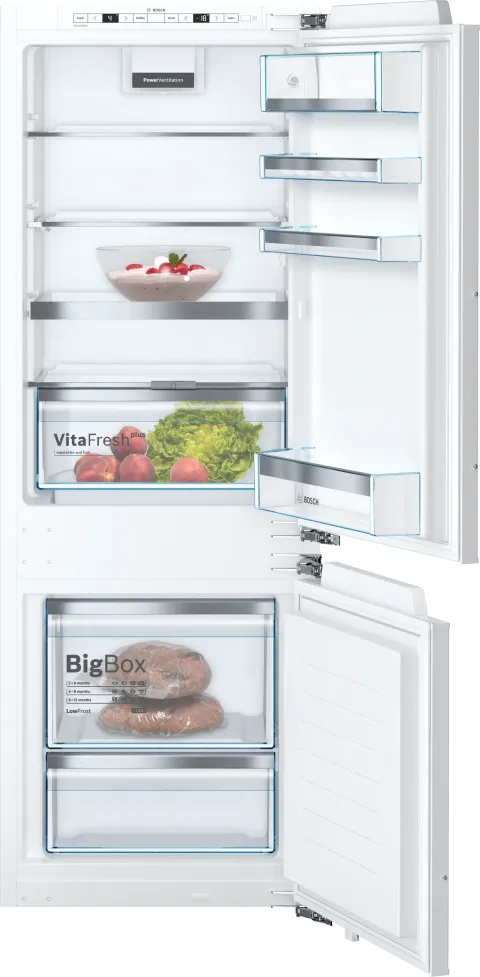
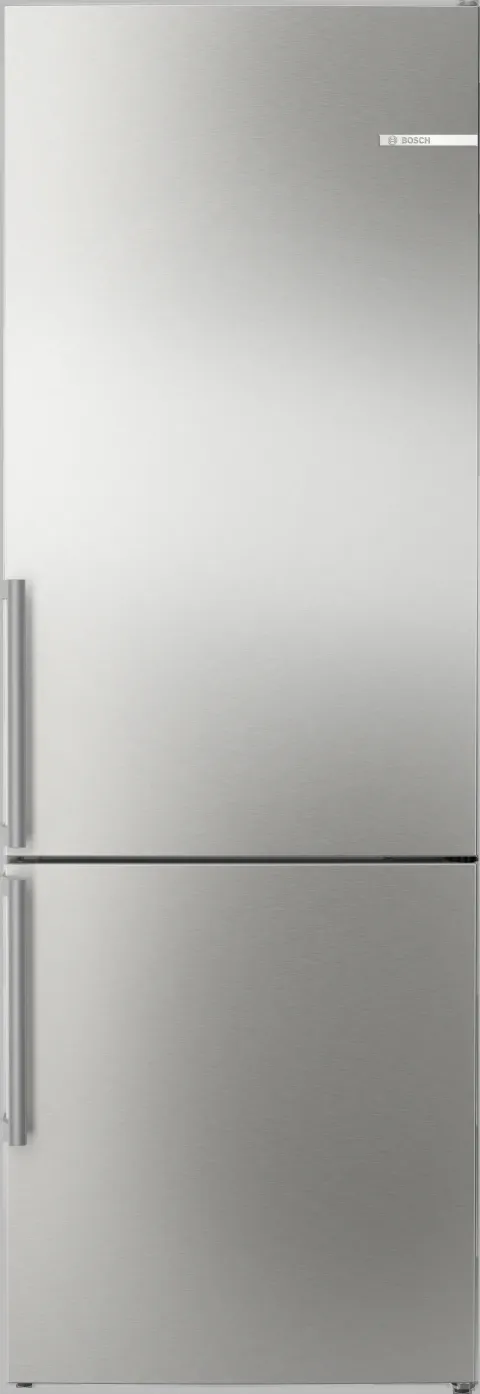
Two real models make the contrast concrete. The Bosch Serie 4 KGN49VICT, a 70cm-wide, 203cm-tall built-in, is 949 EUR for 440 litres total, 2.16 EUR per litre, cheaper per litre than the freestanding median of 2.33. It is rated energy class C with 178 kWh a year and 35 dB of noise, a genuinely competitive built-in on every axis once the cabinet opening is wide enough. At the other end, the Bosch Serie 8 KIS77ADD0, a 55.8cm-wide built-in, is 1,849 EUR for 229 litres, 8.07 EUR per litre, the single worst value in the entire built-in set. Same installation type, same brand tier, and a nearly fourfold gap in what you pay per litre, driven almost entirely by cabinet width.
Why do narrow built-in fridges skew toward D and E energy ratings?
This is worth stating carefully, because it looks like a coincidence until you check the numbers and then it looks like a pattern, but not a proven one. Among narrow built-in fridges, 94.4 percent (17 of 18) carry an energy class of D or E, and only one of the eighteen reaches C or better. Among wide built-in fridges, that drops to 33.3 percent (3 of 9). Among freestanding fridges, it drops further still, to 10.5 percent (4 of 38), with 76.3 percent rated A, B or C. Across all built-in fridges combined, 71.4 percent (20 of 28) are D or E.
A plausible mechanism: a slim cabinet column leaves less room for insulation thickness and constrains which compressor a manufacturer can fit, both of which affect efficiency more than raw capacity does. That is a reasonable read of the pattern in our own catalog’s current lineup, and it lines up with the same narrow slots also carrying the worst price-per-litre figures, a double cost for the narrowest built-in format. It is not something Bosch, Siemens or Samsung states as a design tradeoff, so treat it as an observed pattern to verify on the specific model you are considering, via the European Commission’s own energy label listing, not as a law that every narrow built-in fridge must obey.
Is built-in at least quieter, to justify the price?
No, and this rules out the one explanation that would make the price gap sound reasonable. Across a matched sample of 28 built-in and 28 freestanding fridge-freezers, average maximum noise is 34.8 dB for built-in and 34.9 dB for freestanding, a difference of one-tenth of a decibel, not something a human ear could distinguish. Whatever built-in is charging a premium for, it is not quiet operation. The Bosch KIL72AFE0 in our opening pair runs at 36 dB; the freestanding Samsung runs at 34 dB, if anything the freestanding model is marginally quieter, the opposite of what a “built-in costs more because it’s engineered to be discreet” story would predict.
What should you actually do if you’re planning a renovation?
Start with the cabinet opening, not the fridge model. If your kitchen layout gives you any flexibility, a 60cm-plus built-in opening cuts the price-per-litre premium from 135 percent above freestanding down to roughly 25 percent, on our numbers, while still giving you the flush, cabinet-front look a renovation is usually chasing. If you are locked into a narrow 54 to 55.8cm slot, know going in that you are paying close to double per litre and should check the energy class on that specific model rather than assume it matches whatever class the equivalent freestanding fridge carries elsewhere in the same brand’s range.
Either way, compute euros per litre yourself for any two models you are seriously weighing, built-in or freestanding: divide the price by total net volume, the same math behind every figure in this piece. Two fridges at a similar sticker price can differ by hundreds of litres, exactly like the Bosch and Samsung pair above, and the price tag alone will never tell you that. The refrigerator comparison tool will line up price, volume, energy class and noise for any two models side by side, and if you also want to see how a fridge’s usable space splits between fresh and frozen storage rather than just its total litres, our piece on freezer-to-fridge ratio covers that separate axis. Once you have a shortlist, run the energy class through the running cost tool to turn the letter grade into an annual euro figure before you commit to either format. Browse the full refrigerator range with both the width and the per-litre math in hand, and the fitted-kitchen look will cost you exactly what you decided it should, not whatever the cabinet slot happened to allow.
Appliances in this analysis
Bosch
Serie 6 KIL72AFE0
Samsung
RB53DG706AB1EF
Bosch
Serie 6 KIS77ADD0
Bosch
Serie 4 KGN49VICT
Samsung
RB38C600DSA-EF
Related categories
Frequently asked questions
Is a built-in fridge always smaller than a freestanding one? +
No, but it usually is at the common cabinet width. Built-in fridge-freezers in our database have a median total volume of 270 litres against 387 litres for freestanding models, mostly because most built-in units are fitted into a narrow 54 to 56cm slot. A wide built-in opening changes that: the Bosch Serie 4 KGN49VICT, a 70cm-wide built-in, holds 440 litres, more than most freestanding models. The limiting factor is cabinet width, not the built-in category itself.
Why do built-in fridges cost more per litre than freestanding ones? +
In our own catalog, built-in fridge-freezers cost a median 4.79 EUR per litre against 2.33 EUR per litre for freestanding models, and most of that gap sits in narrow 54 to 56cm slots, which run 5.47 EUR per litre. A wide built-in opening (60cm or more) narrows the gap to 2.92 EUR per litre, only 25 percent above freestanding pricing. Fitting a compressor, insulation and hardware into a slim cabinet column appears to cost more per litre of usable space than it does in a freestanding cabinet, though manufacturers do not publish a cost breakdown to confirm the mechanism directly.
Does a built-in fridge use more energy than a freestanding one? +
Our catalog shows a pattern worth checking model by model rather than a guaranteed rule: 94.4 percent of narrow built-in fridges (17 of 18) carry an energy class of D or E, against 10.5 percent (4 of 38) of freestanding models. The Bosch Serie 6 KIL72AFE0 used as our built-in example is rated E; the freestanding Samsung RB6000D RB53DG706AB1EF is rated A. A plausible reason is that a narrow cabinet slot limits insulation depth and compressor choice, but that is an inference from the data, not a fact any manufacturer states outright, so check the energy label on the specific model rather than assuming.
What should I check before choosing a built-in fridge for a kitchen renovation? +
Three things. First, if your kitchen layout allows it, plan for a 60cm or wider cabinet opening rather than a slim 54 to 56cm column: in our data that alone cuts the built-in price-per-litre premium from 135 percent above freestanding to roughly 25 percent. Second, read the energy class on the specific model rather than assuming built-in means efficient; narrow built-in units skew heavily toward D and E in our catalog. Third, divide price by total litres yourself for any two models you are comparing, built-in or freestanding, since the sticker price alone hides the capacity gap.
Sources
More from the blog