Why 'A' Means Nothing Until You Know the Category
Across the appliances we track, a top washing machine reaches A while the best fridge sits at D and the best TV at E. Same letters, different scales. Here's how to read them.
By Nora Fischer · Last updated 19 July 2026
Researched and drafted with AI language-model assistance from CompareHomeAppliances' own verified spec database and cited public sources, per our AI-content disclosure.
If you shop by the letter on the energy label, you will misread half the appliances in your kitchen. In the 27 energy-labelled products we currently hold spec data for, the best washing machine reaches A, the best dishwasher reaches A, but the best refrigerator sits at D and the best television at E. None of those models are bad. They are just being graded on scales that were reset at different times, and the letter alone hides that completely.
Key takeaways:
- All five washing machines in our data are rated A; the fridges we track sit at D or E, and the TVs at E, F or G, all on the same post-2021 A-to-G scale.
- A fridge rated D and a dishwasher rated A can both be efficient modern appliances. The 2021 rescale left A and B nearly empty on purpose, so a mid-scale letter is now normal, not a warning.
- Three categories we cover, tumble dryers, ovens and air conditioners, were never part of the 2021 rescale, so they still show A+++ or A+ on the old label. Those pluses do not mean they beat an A-rated washing machine.
- The only reliable cross-model number is the absolute one: annual kWh, or energy per 100 cycles, never the letter on its own.
Which categories share the same scale?
The March 2021 rescale reset washing machines, dishwashers, refrigerators and electronic displays (televisions) onto a clean A-to-G scale, with the top grades deliberately hard to reach so there was room for future efficiency gains to show up. That is why, in our own data, the letters cluster where they do:
| Category | Energy classes in our data | Which scale |
|---|---|---|
| Washing machines | A (all 5 models) | 2021 A-to-G |
| Dishwashers | A, B, C | 2021 A-to-G |
| Refrigerators | D, E | 2021 A-to-G |
| Televisions | E, F, G | 2021 A-to-G |
| Ovens | A+ (all 5 models) | Legacy A+++-to-D |
| Tumble dryers | A++, A+++ | Legacy A+++-to-D |
| Air conditioners | A, A+ | Legacy A+++-to-D |
Read across that table and the trap is obvious. A washing machine and an oven can sit on the same shelf, both near the “top” of their label, and mean completely different things. The oven’s A+ is the old top; the washing machine’s A is the new top, and the new top is far harder to earn.
Why does the best fridge only reach D?
Because fridges were rescaled the hardest. When regulators reset the cold-appliance scale in 2021, they pushed almost every existing model down several letters overnight, leaving A and B nearly vacant for technology that did not exist yet. So a refrigerator that would have proudly worn A++ under the old label now reads D or E, with no change to the actual appliance.
That is the single most misread label on the market. In our data, every fridge lands at D or E, and every one of them is a current, mainstream model. The chart below shows the best (lowest-letter) class we currently record in each of the four rescaled categories, mapped onto the A-to-G scale where A is 7 and G is 1.
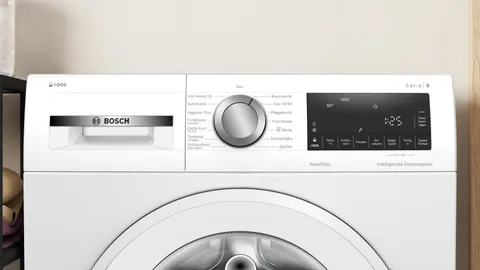
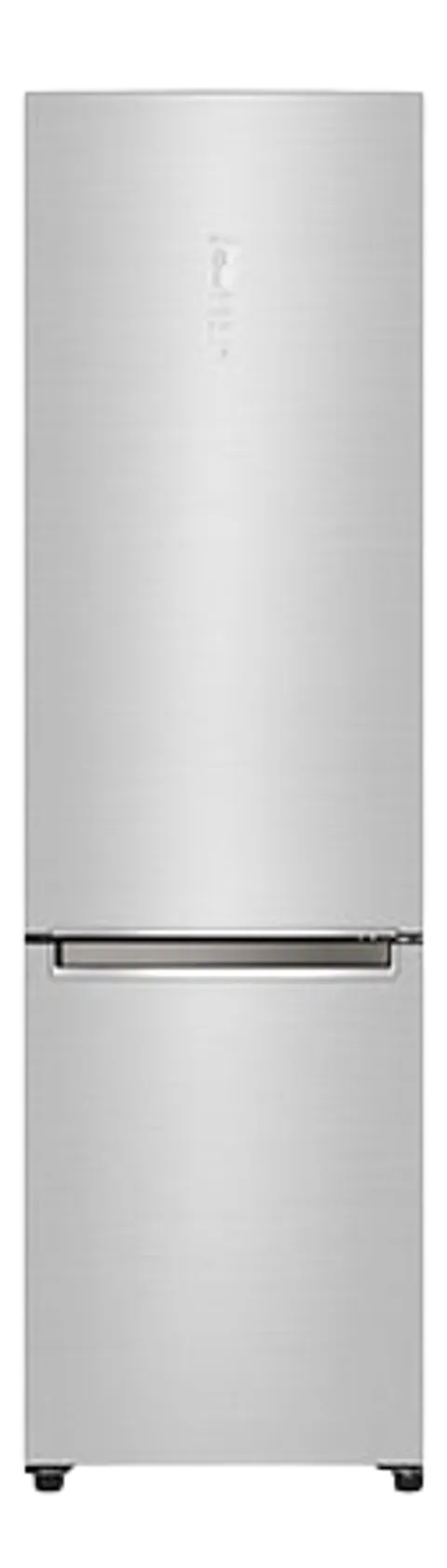
The washing machines and dishwashers stretch to full A; the fridges and TVs fall well short, not because they are worse products, but because their scales have more headroom left. Compare a Bosch Series 6 washing machine at A with the LG GBB92 fridge at D and you are not looking at a good appliance versus a bad one. You are looking at two different rulers.
So how should you actually read the label?
Three rules cover almost every case.
- Never compare the letter across categories. A’s threshold for a dishwasher is not A’s threshold for a fridge, and neither is comparable to an oven’s A+. Our compare tool enforces this by only letting you line up appliances of the same type.
- Treat pluses as a warning sign, not a bonus. A + in the class means the category is still on the old scale and has not been rescaled yet. It is not “better than A”; it is a different, older grade. When those categories migrate, today’s A+++ dryer will quietly become a B or C.
- Anchor on the absolute number. The letter is a relative grade within a size band. The kWh figure is what your meter charges you for. We publish both on every spec page, and the running-cost tool turns either one into a real annual euro cost.
The label is genuinely useful once you know which scale you are reading. The mistake is assuming there is only one. For the full mechanics of the 2021 rescale, our energy label explainer walks through every part of the label in order.
Appliances in this analysis
Bosch
Series 6 WGG244F90
LG
GBB92STAXP
LG
OLED evo C4 (OLED65C43LA, 2024)
Bosch
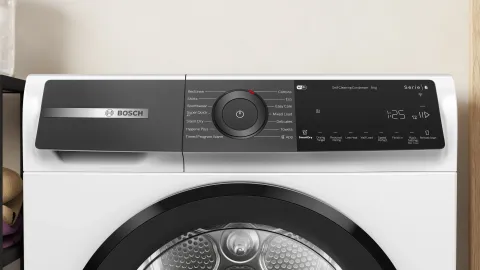
Series 6 WQH246D9GB
Related categories
Frequently asked questions
Is a fridge rated D actually inefficient? +
Not necessarily. Fridges and freezers were rescaled hard in March 2021, so classes A and B were deliberately left almost empty for future technology. A D-rated fridge sold today is often a perfectly normal, efficient modern model. Judge it by its absolute annual-kWh figure, not by how far the letter sits from A.
Why does a tumble dryer say A+++ when a washing machine only reaches A? +
Because they are on two different scales. Washing machines, dishwashers, fridges and TVs moved to the new A-to-G scale in 2021. Tumble dryers, ovens and air conditioners were not part of that rescale and still carry the older A+++-to-D label, where A+++ is the top. An A+++ dryer and an A washing machine are not directly comparable on their letters.
How do I compare two appliances fairly on energy? +
Only compare energy class within the same category, and always cross-check the absolute figure: annual kWh for fridges and TVs, energy per 100 cycles for washing machines and dishwashers. Our running-cost tool converts either into a yearly euro cost at your own tariff.
Will more categories move to the new A-to-G scale? +
Yes. The EU is rescaling categories in waves. Tumble dryers, ovens and other groups still on the old A+++ label are expected to migrate to the clean A-to-G scale in future revisions, at which point their top models will also drop several letters overnight, exactly as fridges and washing machines did in 2021.
Sources
More from the blog