The 24 Percent Hob Wattage Gap That Barely Matters
Gas hobs in our data average 23.8 percent more rated power than electric ones, but EU efficiency figures put the actual heat delivered within 1.4 percent.
By Nora Fischer · Last updated 6 August 2026
Researched and drafted with AI language-model assistance from CompareHomeAppliances' own verified spec database and cited public sources, per our AI-content disclosure.
Stand in front of two hobs at the showroom and the spec cards make the decision look obvious: the gas model reads 13.8 kW, the induction model next to it reads 7.4 kW, and the gas number is nearly double. That gap is real on paper. It is mostly an illusion once you apply the European Commission’s own measured efficiency data to it, and the reason comes down to a single word the spec card never mentions: how much of that rated power actually reaches the pan.
Key takeaways:
- Gas hobs in our database (n=5) average 9.86 kW rated power; electric hobs, induction and ceramic-electric combined (n=15), average 7.97 kW, a 23.8 percent gap.
- The EU Commission’s own 2020 EU-wide measured efficiency average is 62.4 percent for gas hobs and 78.3 percent for electric hobs, applied here to fuel-type averages, not to any single lab-tested unit.
- Multiply those figures through our catalog’s averages and the estimated effective heat delivered comes out at about 6.15 kW for gas versus 6.24 kW for electric, roughly 1.4 percent higher for electric despite gas’s much bigger rated number.
- Hobs currently carry no EU A-to-G energy label at all, gas or electric, unlike fridges, washing machines or dishwashers.
- 10 of the 11 induction hobs we track share the identical 7,400W rating from 569 EUR to 2,799 EUR; price buys zone count and features, not power.
Why do the rated-power numbers look so different on paper?
Because gas burners and electric elements are rated on completely different physical processes, and our own catalog shows the gap clearly. The five gas hobs in our database average 9,860 W, ranging from 7,500 W up to a 13,800 W flagship. The fifteen electric hobs, combining induction and ceramic-electric, average 7,967 W. Split those two electric types apart and induction alone averages 7,736 W while ceramic-electric alone averages 8,600 W (a smaller group, worth noting but not the headline figure here). We also carry one domino hob, a compact two-zone supplemental unit that is structurally different from a full cooktop, so it is excluded from these averages.
Line the two main fuel types up and gas is 23.8 percent ahead of the combined-electric average, and 27.5 percent ahead of induction specifically. That is the number that catches your eye in the showroom. It is also, on its own, not the number that determines how fast your pan actually heats up.
What does “efficiency” actually mean for a hob?
Rated power is the energy going in. Efficiency is how much of it comes out as usable heat at the pan, and the two fuels are not close. The European Commission’s own published figures, drawn from measurements across the installed EU hob stock in 2020, put average efficiency at 62.4 percent for gas hobs and 78.3 percent for electric hobs. A gas flame loses a large share of its heat around the sides of the pan and up into the room; an induction coil, by contrast, generates its heat directly inside the pan’s own base, which is the physical reason electric measures so much higher.
That 62.4/78.3 split is a real EU-wide average across many installed hobs, not a lab certificate for any one Bosch model in our catalog. Keep that scope in mind for what follows.
So what happens when you apply that to our own catalog?
This is where the two numbers actually meet, and it is the counter-intuitive part. Take our catalog’s average rated power for each fuel type and multiply by the EU’s efficiency average for that fuel type, and you get an estimate of the effective heat a typical hob in each group delivers:
| Hob type | Count in our database | Average rated power | EU-wide measured efficiency (2020) | Estimated effective heat |
|---|---|---|---|---|
| Gas | 5 | 9.86 kW | 62.4% | ~6.15 kW |
| Electric (induction + ceramic) | 15 | 7.97 kW | 78.3% | ~6.24 kW |
Gas: 9,860 W x 0.624 is about 6,153 W. Electric: 7,967 W x 0.783 is about 6,238 W. Despite gas carrying a 23.8 percent bigger rated-power number, the estimated effective heat comes out very slightly higher for electric, about 1.4 percent, not lower. The chart below breaks the same rated-power comparison down by native hob type instead of the combined grouping, so you can see where gas’s on-paper lead actually comes from.
Read that as a caveat, not a certificate: this is a model built from two real, sourced numbers, our catalog’s rated-power averages and the Commission’s fuel-type efficiency averages, not a laboratory measurement of any single hob in either group. It tells you what a typical unit in each group should deliver, not what a specific Bosch PRS9A6B70D or PIE61RBB5E will do on your own stove.
Why isn’t any of this on an energy label?
Because hobs, gas or electric, do not carry one. The European Commission states it plainly: “Under these rules, an energy label is not required for hobs.” Fridges, washing machines and dishwashers all display the familiar A-to-G scale; hobs sit outside that framework entirely, and the Commission is only assessing whether to add a rescaled label in future, with nothing decided yet. If you have read our explainer on what the energy-class letter actually means, you already know that letter is category-scoped and can mislead even where it does exist. For hobs, the letter is not even a factor to misread, because there is no letter at all. The rated-power number on the spec sheet is effectively the only figure most shoppers see, which is exactly how a 23.8 percent gap ends up looking far more decisive than it is.
So what should actually decide gas versus induction?
Not the kW number on the box. A few things that our data can and cannot speak to:
- Cookware compatibility. Induction needs magnetic-base pans; if your current cookware is aluminum or copper without a steel base, that is a real added cost gas does not carry.
- Price and zone flexibility. Our own hobs category shows induction pricing spans from 569 EUR to well over 2,000 EUR, and as the FAQ above covers, that spread buys zone count and features like bridging zones or flex-induction areas, not more power. Decide how many zones and how much flexibility you actually cook with before paying for the top of that range, such as the five-zone Bosch PXV975DV1E.
- Local electricity-versus-gas pricing. We do not carry a sourced EUR-per-kWh tariff figure for either fuel, and that number varies a lot by contract and region, so treat it as a factor to check with your own supplier rather than something this catalog can settle for you.
None of that shows up in a rated-power comparison, and none of it shows up on a label, because for hobs there isn’t one yet. Once you have picked a fuel type and a handful of candidate models, our running cost tool and buying advisor can turn the numbers that do exist, price, zones, and whatever efficiency data a specific model publishes, into an actual comparison for your kitchen.
Appliances in this analysis
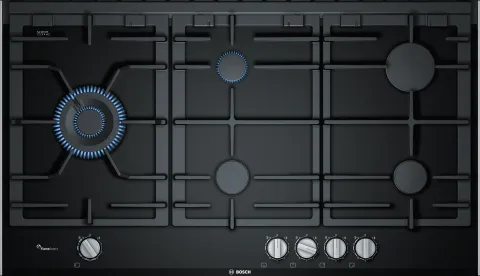
Bosch
Serie 8 PRS9A6B70D
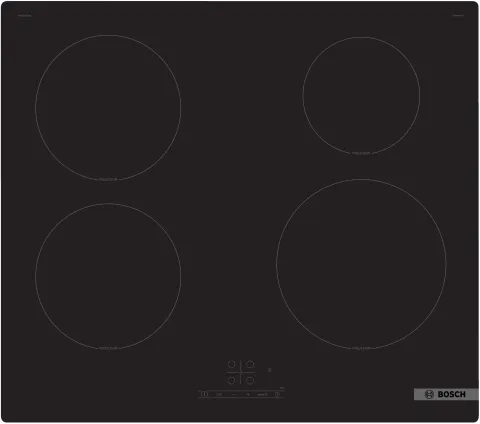
Bosch
Serie 4 PIE61RBB5E
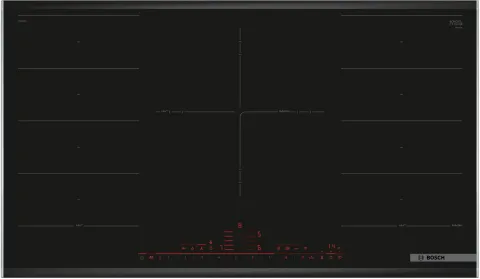
Bosch
Serie 8 PXV975DV1E
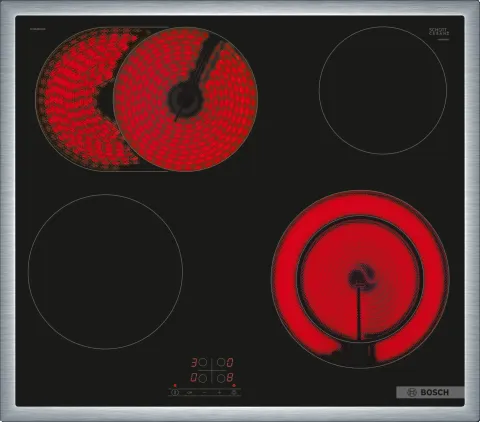
Bosch
Serie 4 PKN645BA2E
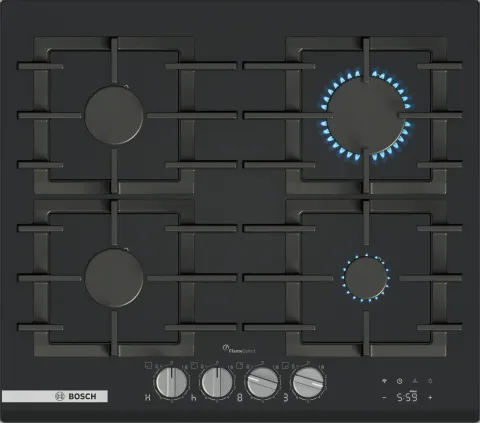
Bosch
Serie 8 PRP6A6H40
Related categories
Frequently asked questions
Do hobs carry an EU A-to-G energy label like fridges or washing machines? +
No. The European Commission is explicit on this: "Under these rules, an energy label is not required for hobs." Gas and electric hobs alike are currently exempt from the A-to-G ecodesign label that fridges, washing machines and dishwashers carry. The Commission is assessing whether to add one, but nothing is in force yet, so you cannot shop a hob by letter the way you can shop those other categories.
Is a gas hob's much bigger kW number a real cooking advantage over induction? +
Not by nearly as much as the spec sheet implies. Gas hobs in our database average 23.8 percent more rated power than electric ones, 9.86 kW versus 7.97 kW. But the EU's own measured efficiency figures show gas converts only 62.4 percent of that power into usable heat, against 78.3 percent for electric. Apply those figures and the estimated effective heat comes out at roughly 6.15 kW for gas and 6.24 kW for electric, meaning electric is estimated to deliver slightly more usable heat despite the smaller headline number.
Why do most induction hobs in the database share the exact same 7,400W rating? +
Ten of the eleven induction hobs we track are rated at 7,400W, spanning models from 569 EUR to 2,799 EUR. What changes as price climbs is zone count and features (bridging zones, flex-induction areas, auto-detection, display type), not total power draw. Only one outlier, the five-zone Bosch PXV975DV1E at 11,100W, breaks that pattern. If you are paying more for an induction hob, you are buying flexibility and zone layout, not extra wattage.
How was the 'estimated effective heat' figure calculated, and how reliable is it? +
It is a model, not a lab measurement of any specific hob. We took our own catalog's average rated power for gas (9.86 kW) and combined induction-plus-ceramic (7.97 kW), then applied the European Commission's separately published 2020 EU-wide average measured efficiency for each fuel type, 62.4 percent for gas and 78.3 percent for electric. Multiplying those together gives a reasonable estimate of typical effective heat, but no single Bosch hob in our database has been lab-tested at that exact efficiency. Treat the resulting kW figures as directional, not a spec you could quote for one specific model.
Sources
More from the blog