The Cheapest Heater Costs the Most Per Watt
Electric heaters carry no EU energy label. Among three models with both a price and a wattage, the cheapest one costs 2.57 times more per watt.
By Nora Fischer · Last updated 13 September 2026
Researched and drafted with AI language-model assistance from CompareHomeAppliances' own verified spec database and cited public sources, per our AI-content disclosure.
You are shopping for a space heater and there is no letter on the box to check. Washing machines, fridges and dishwashers all carry an EU A to G energy label. Electric heaters do not, by explicit EU carve-out, so shoppers fall back on the two numbers a listing does show: price and wattage. That instinct backfires. Among the three heaters in our catalog with both a published price and a published wattage, the cheapest one in plain euros, a 169.99 EUR infrared panel, costs 2.57 times more per watt than the most expensive one, a 230 EUR oil-filled radiator.
Key takeaways:
- Electric space heaters are explicitly excluded from the EU energy label; the European Commission states labelling “also applies to LH, except electric, tube and luminous heaters.”
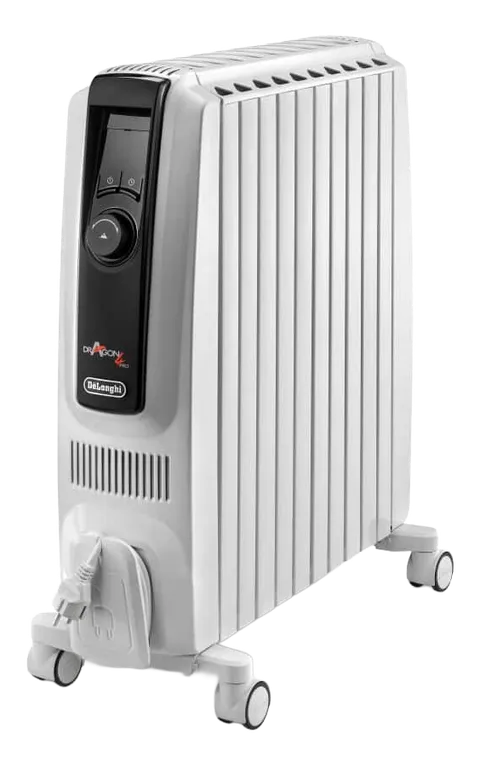
- The DeLonghi Dragon 4 Pro costs 0.092 EUR per rated watt (230 EUR / 2,500 W), the lowest of the three heaters with both figures published.
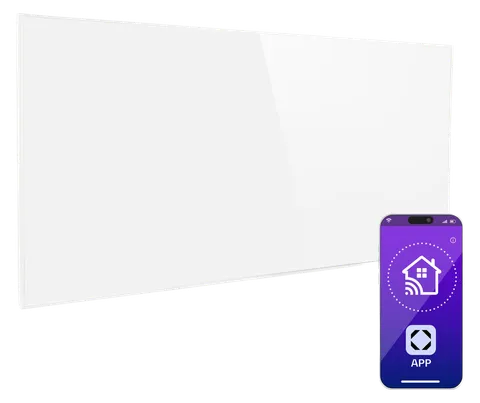
- The Klarstein Wonderwall Smart 720 costs 0.236 EUR per rated watt (169.99 EUR / 720 W), 2.57 times higher, despite being the cheapest heater in absolute price.
- Only 2 of the 5 heaters in our catalog disclose a noise rating at all: Rowenta’s HQ8120 at 47 dB(A) and Stiebel Eltron’s CK 20 Premium at 48 dB(A), both fan-driven models.
- Rowenta’s own guidance is roughly 100 W per m² of room, adjusted for insulation and target temperature, the one figure here that ties wattage to an actual room size rather than to price.
Why don’t electric heaters carry an energy label?
Two separate EU rules cover local space heaters. Ecodesign sets minimum efficiency requirements: Reg. (EU) 2024/1103 for liquid, gas and electric heaters (mandatory since 1 January 2018), and a separate Reg. (EU) 2015/1185 for solid-fuel heaters like wood and pellet stoves. Energy Labelling is the second rule, Reg. (EU) 2015/1186, and its scope is narrower. The European Commission states it plainly on its own local space heaters page: labelling “also applies to LH, except electric, tube and luminous heaters.” Solid-fuel stoves get the familiar A++ to G badge. Electric heaters, all five in our own catalog included, do not. They are not unregulated, they simply have no label a shopper can glance at in a shop or on a listing page, which pushes the comparison onto whatever raw numbers are printed on the box.
Here is what those numbers look like across our five heaters:
| Model | Type | Power (W) | Price (EUR) | Noise (dB(A)) |
|---|---|---|---|---|
| DeLonghi Dragon 4 Pro TRDX41025E | Oil-filled radiator | 2,500 | 230 | N/A |
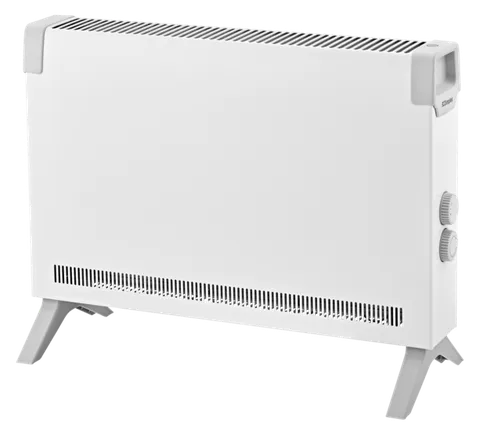
| Dimplex Standkonvektor DX 521 | Convector (2-stage) | 2,000 (top stage) | N/A | N/A |
| Klarstein Wonderwall Smart 720 | Infrared panel | 720 | 169.99 | N/A |
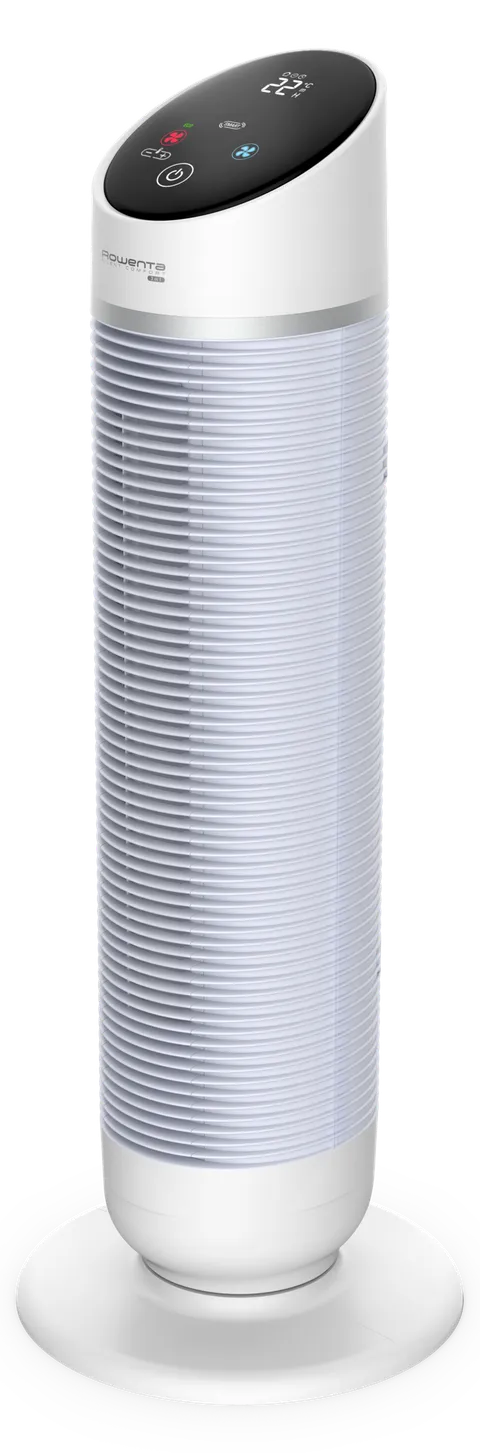
| Rowenta Silent Comfort 3-in-1 HQ8120 | Fan heater (also fan + air purifier) | 2,400 | 314.99 | 47 |
| Stiebel Eltron CK 20 Premium | Fan heater (wall-hung) | 2,000 (top stage) | N/A | 48 |
Why does the cheapest heater cost the most per watt?
Three of these five publish both a price and a wattage, so those are the only three you can honestly divide one figure by the other:
The DeLonghi Dragon 4 Pro comes out at 0.092 EUR per watt (230 EUR for 2,500 W). The Klarstein Wonderwall Smart 720 comes out at 0.236 EUR per watt (169.99 EUR for 720 W), 2.57 times higher, even though it is the cheapest heater of the three at the checkout and rated at less than a third of DeLonghi’s wattage. Read as a naive ranking, Klarstein looks like the worst deal in the group and DeLonghi looks like the best. That ranking is misleading, and the reason why matters more than the number itself.
Why can’t you compare wattage across heater types?
The three heaters above are not doing the same job. DeLonghi’s oil-filled radiator and Dimplex’s convector heat by warming the air in a room, which is why DeLonghi states a whole-room coverage rating of up to 75 m³. Klarstein’s Wonderwall is an infrared panel, and the manufacturer’s own product page says so directly: “Infrarotstrahlung heizt direkt Oberflächen und Personen, nicht die Luft” (“Infrared radiation heats surfaces and people directly, not the air”). It is built to warm a person or a spot, often as supplemental heat in an already-insulated room, not to raise a whole room’s air temperature the way a radiator does. Judging its watts against a radiator’s watts is like scoring two different tools on a spec that only describes one of their jobs.
Price tells a second, separate story with the Rowenta HQ8120. Its 314.99 EUR price and mid-pack 0.131 EUR per watt are not purely a heating-value figure, because the HQ8120 is also a standalone tower fan and an air purifier. Part of what you pay for is those two extra functions, not heat alone, which makes a direct per-watt comparison against the other four, heater-only models unfair in the other direction.
The comparison that would actually be fair is watts per euro within the same heater type doing the same job, oil-filled radiator against oil-filled radiator, infrared panel against infrared panel. Our catalog only holds one of each type right now, so that comparison is not honest to run yet. Better to say that plainly than force a chart out of a sample of one.
Why don’t more heaters list a noise rating?
Only two of the five heaters here publish a noise figure at all: Rowenta’s HQ8120 at 47 dB(A) in heating mode and Stiebel Eltron’s CK 20 Premium at 48 dB. Both are fan-driven. DeLonghi’s radiator, Dimplex’s convector and Klarstein’s infrared panel have no fan, and a plausible reason they skip a noise spec is that there is no moving air to measure, not that the figure is being hidden. It is the same disclosure pattern we found in hair dryer wattage listings: the manufacturers most likely to publish a number are the ones with something loud enough to be worth measuring.
How many watts do you actually need?
Rowenta’s own FAQ for the HQ8120 gives the most useful number in this whole comparison, because it is the one figure that ties wattage to a room instead of to a price tag: “Das Verhältnis zwischen Leistungsstufe und beheiztem Bereich hängt von der gewünschten Temperatur, der Außentemperatur und der Isolierung des Hauses ab. Im Durchschnitt wird eine Leistung von 100 W pro m² empfohlen.” (“The ratio between power level and heated area depends on the desired temperature, the outdoor temperature, and the insulation of the house. On average, a power of 100 W per m² is recommended.”) For a 20 m² living room, that formula starts you at 2,000 W, then you adjust up for poor insulation or a cold climate and down for a well-sealed, already-warm room. Check that starting point against any coverage claim the specific product states, the way DeLonghi states 75 m³ for the Dragon 4 Pro, rather than against its price or against a different heater’s watts.
Don’t shop an electric heater by price per watt across types; there is no label to force that discipline the way there is for a fridge. Match the heater to the job first, whole-room versus spot, then size the watts to the room with a rule like Rowenta’s. None of these five heaters publish the annual energy figure this site’s running cost tool needs to turn a rating into a yearly euro number, one more version of the same disclosure gap covered above; the full lineup is on the heaters category page alongside how each one stacks up on price and features. For how the A to G label itself works on the appliances that do carry one, see our guide to the EU energy label.
Appliances in this analysis
De'Longhi
Dragon 4 Pro TRDX41025E
Dimplex
Standkonvektor DX 521
Klarstein
Wonderwall Smart 720W
Rowenta
Silent Comfort 3-in-1 HQ8120
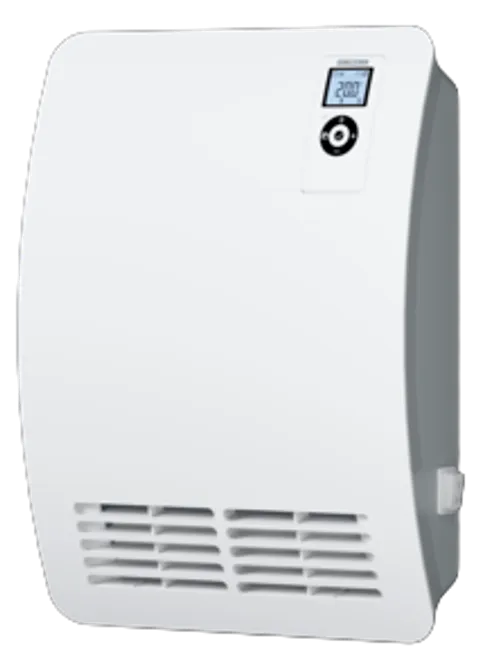
Stiebel Eltron
CK 20 Premium
Related categories
Frequently asked questions
Do electric space heaters carry an EU energy label? +
No. The European Commission's own local space heater page states that energy labelling 'also applies to LH, except electric, tube and luminous heaters.' Solid-fuel heaters like wood or pellet stoves do get an A++ to G label. Electric heaters are still covered by minimum-efficiency Ecodesign rules (Reg. (EU) 2024/1103, mandatory since 1 January 2018), just not by the label itself, so there is no badge to compare at a glance.
Why can't I just compare euros per watt across heater types? +
Because wattage buys a different job depending on the heater. A convector or oil-filled radiator heats room air, rated by whole-room coverage. An infrared panel heats people and surfaces directly, not the air, by the manufacturer's own description. Comparing their price per watt as if they compete for the same task treats two different jobs as one.
How many watts do I actually need? +
Rowenta's own guidance for its fan heaters is about 100 W per m² of room, adjusted up or down for insulation, outdoor temperature and how warm you want the room. For a 20 m² living room that is a 2,000 W starting point, then check it against any coverage figure the manufacturer states, such as DeLonghi's 75 m³ rating for its Dragon 4 Pro.
Does a bigger wattage always mean a bigger electricity bill? +
Only if the heater actually runs at that wattage for the same amount of time and is doing the same job. A higher-wattage whole-room heater run briefly can cost less than a lower-wattage spot heater left on for hours. Wattage is the rate of draw, not the bill itself; the bill depends on how long it runs and at which of its stages, which for a multi-stage heater will usually be far below its top rating.
Sources
More from the blog