A 2-in-1 Washer-Dryer Dries 61% of What It Washes
Six Bosch washer-dryers wash up to 10.5 kg but dry only 4 to 6 kg per cycle, 55.6 to 66.7 percent of the load. Check dry capacity before choosing a 2-in-1.
By Nora Fischer · Last updated 4 August 2026
Researched and drafted with AI language-model assistance from CompareHomeAppliances' own verified spec database and cited public sources, per our AI-content disclosure.
If you are weighing a 2-in-1 washer-dryer against two separate machines, check the dry capacity number before the wash capacity number. Across the six current Bosch washer-dryers in our database, dry capacity averages just 61% of wash capacity, ranging from 55.6% to 66.7%. Not one of them can dry a full wash load in a single cycle.
Key takeaways:
- Across six Bosch washer-dryers, dry capacity averages 61% of wash capacity (range 55.6% to 66.7%). None dries a full wash load in one cycle.
- The Bosch Serie 4 WNA13441 has the widest gap: it washes 9 kg but dries only 5 kg (55.6%). The Serie 8 WNC244070 and Serie 6 WNG24442 have the narrowest, drying 6 of the 9 kg washed (66.7%).
- Same brand, same 9 kg wash capacity: a standalone Bosch washing machine (class A, 699-739 EUR) costs 300-310 EUR less, 42-43%, than the matching washer-dryer (class D, 999-1,049 EUR).
- None of the six washer-dryers reaches energy class A, B, or C. The comparable standalone Bosch washing machines of the same capacity reach class A.
- A washer-dryer trades floor space and a second plumbing hookup for lower dry capacity and a lower energy class. That is a real fit for a tight utility space, not an automatic upgrade.
How much less does a washer-dryer actually dry?
A washer-dryer’s spec sheet lists two capacity numbers, not one, because washing and drying are different mechanical jobs sharing one drum. Washing just needs the load submerged and agitated. Drying needs hot air moving freely through every piece of fabric, so the drum has to run partly empty to dry properly, which is why the dry figure is always the smaller one.
| Model | Wash capacity | Dry capacity | Dry as % of wash | Price | Energy class | Install type |
|---|---|---|---|---|---|---|
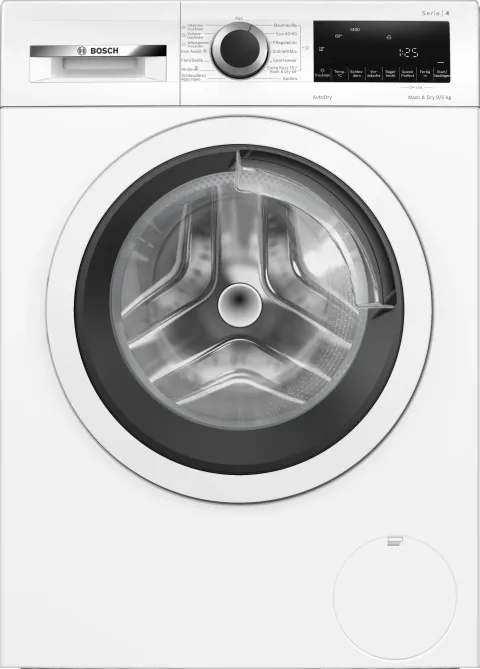
| Bosch Serie 4 WNA13441 | 9.0 kg | 5.0 kg | 55.6% | 899 EUR | E | Freestanding |
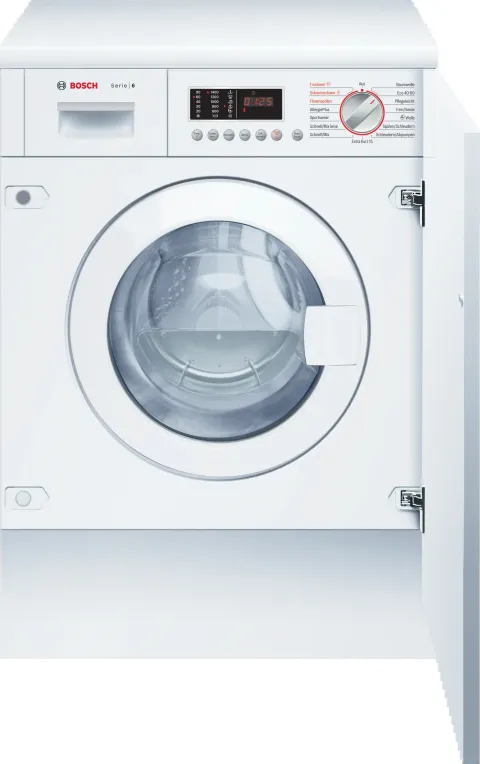
| Bosch Serie 6 WKD28543 | 7.0 kg | 4.0 kg | 57.1% | N/A | E | Built-in |
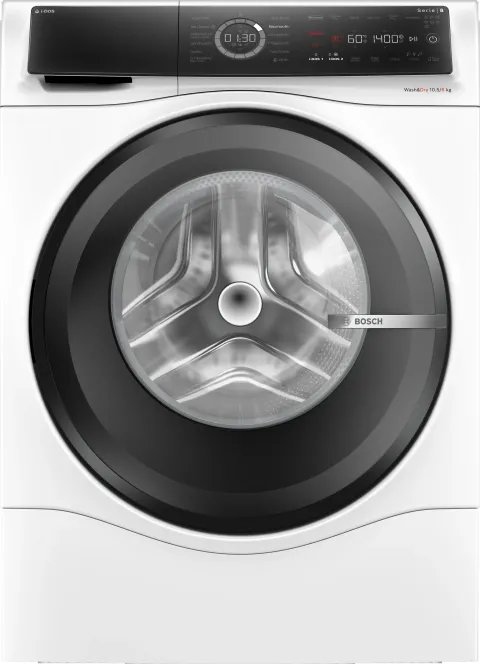
| Bosch Serie 8 WNC254A40 | 10.5 kg | 6.0 kg | 57.1% | 1,299 EUR | D | Freestanding |
| Bosch Serie 6 WKD28490 | 8.0 kg | 5.0 kg | 62.5% | 1,369 EUR | E | Built-in |
| Bosch Serie 8 WNC244070 | 9.0 kg | 6.0 kg | 66.7% | 1,049 EUR | D | Freestanding |
| Bosch Serie 6 WNG24442 | 9.0 kg | 6.0 kg | 66.7% | 999 EUR | D | Freestanding |
Take the WNA13441 as the practical case. It washes a full 9 kg load but can only dry 5 kg of it at once. On laundry day that means running the dryer twice, or pulling roughly 4 kg, nearly half the load, out of the drum before starting it. Either way, “wash and dry in one machine” does not mean “wash and dry in one cycle” for any model in this table.
Which of the six has the smallest gap?
The WNC244070 and WNG24442 sit at the top with 66.7%, both drying 6 of the 9 kg they wash. The WNA13441 sits at the bottom with 55.6%, drying 5 of 9 kg. That gap, about 11 percentage points, is the difference between splitting a load roughly in half versus splitting off just a third of it. If dry capacity matters more to your routine than the lowest sticker price, the ratio in this chart is a better filter than either raw number alone.
What does skipping the second machine actually cost you?
To see what a 2-in-1 costs against buying separately, we compared same-brand, same-9kg-wash-capacity pairs: one Bosch washer-dryer against one standalone Bosch washing machine of matching capacity.
| Model | Type | Wash capacity | Price | Energy class |
|---|---|---|---|---|
| Bosch Serie 6 WGG244120 | Washing machine | 9.0 kg | 739 EUR | A |
| Bosch Serie 8 WNC244070 | Washer-dryer (6 kg dry) | 9.0 kg | 1,049 EUR | D |
| Bosch Serie 6 WUU28T42 | Washing machine | 9.0 kg | 699 EUR | A |
| Bosch Serie 6 WNG24442 | Washer-dryer (6 kg dry) | 9.0 kg | 999 EUR | D |
Both pairs land within a point of each other: the WNC244070 costs 310 EUR more than the WGG244120, a 42% premium, and the WNG24442 costs 300 EUR more than the WUU28T42, a 43% premium. Both washer-dryers also drop three rungs on the energy label, from A down to D. This is two pairs within one brand, not a market-wide census, but the fact that two independent comparisons land within a point of each other on both price premium and energy-class drop is what makes it a pattern worth planning around, not a fluke of one product pairing.
Is a 2-in-1 washer-dryer worth it?
If you have room and plumbing for two machines, the numbers above favor buying them separately: a class A washing machine plus a standalone dryer will out-dry any washer-dryer’s single-cycle capacity and, on this Bosch pricing, cost less than the combined unit while landing at a better energy class. If you do not, a small German apartment with one hookup and no space for a second appliance, the washer-dryer’s convenience is real and worth the 42-43% premium and the drop to class D. Just plan for the dry-capacity gap: budget for a second dry cycle, or a smaller load, whenever you actually need the full wash capacity dried in one go.
Before you buy, check the model’s real, current label in the EPREL public registry, the EU’s own database behind every energy label, rather than trusting a listing photo. Then run either scenario through our running-cost tool to turn the energy-class gap into an annual euro figure, or line up specific models side by side in the compare tool.
Appliances in this analysis
Bosch
Serie 4 WNA13441
Bosch
Serie 6 WKD28543
Bosch
Serie 8 WNC254A40
Bosch
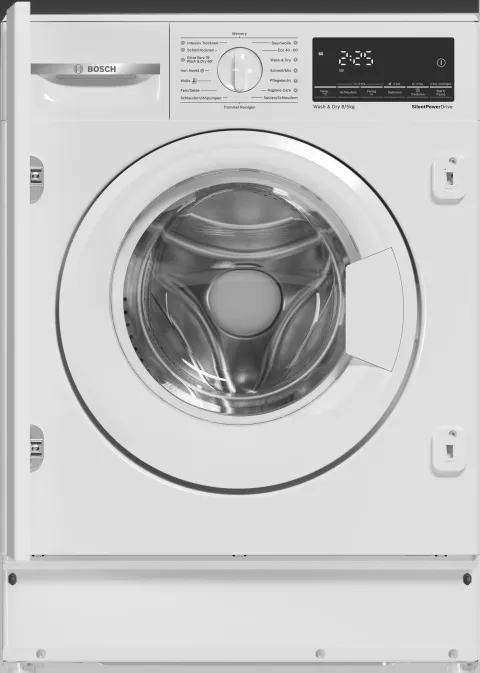
Serie 6 WKD28490
Bosch
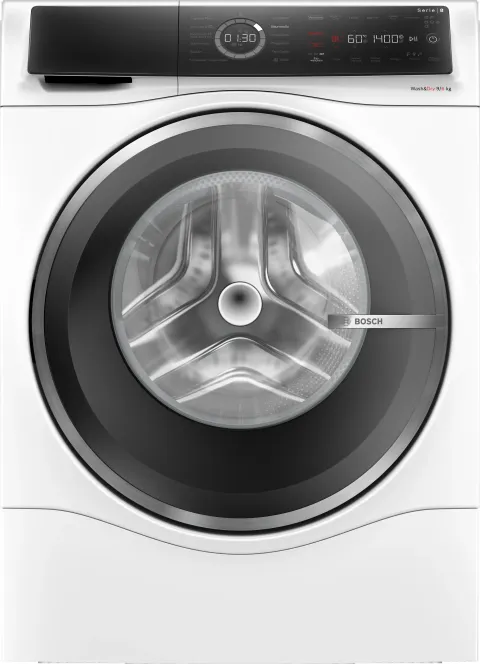
Serie 8 WNC244070
Bosch
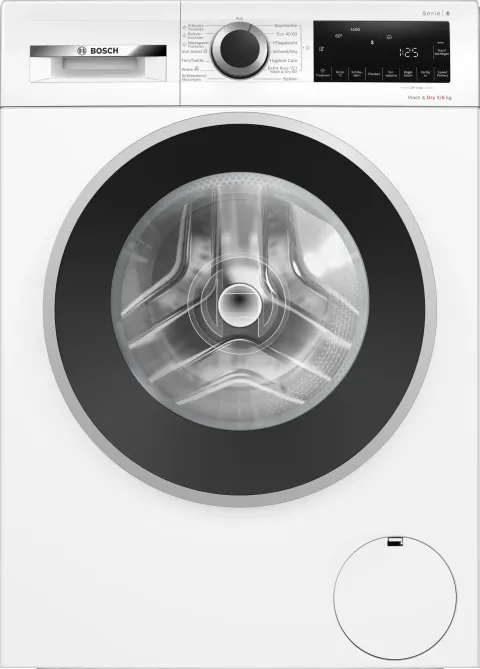
Serie 6 WNG24442
Related categories
Frequently asked questions
What does dry capacity mean on a washer-dryer, and how is it different from wash capacity? +
Wash capacity is the maximum dry laundry weight the drum can wash in one cycle. Dry capacity is the maximum weight it can then dry in one cycle, and it is always smaller, because the drying stage needs room for hot air to circulate through the load. A machine rated 9 kg wash / 6 kg dry can wash a full 9 kg load but must split it, or run the dryer twice, to get all of it dry.
Can a washer-dryer dry an entire wash load in one cycle? +
Not for any of the six Bosch washer-dryers in our database. Dry capacity runs from 55.6% to 66.7% of wash capacity across the six, averaging 61%. Every one of them leaves part of a full wash load in the drum after the dry cycle ends.
Is a 2-in-1 washer-dryer worth it compared to a separate washing machine and dryer? +
In our two same-brand, same-9kg comparisons, the washer-dryer cost 42-43% more than the equivalent standalone washing machine and dropped from energy class A to D. You gain one appliance instead of two and a smaller footprint, which matters in a small German apartment with no second hookup, but it is a real trade-off, not a free upgrade.
Where can I check a washer-dryer's real, current energy label before buying? +
Look it up directly in the EU's EPREL public registry (the official database behind every EU energy label) rather than trusting a listing photo, and check the energy label badge on the product's own page on this site.
Sources
More from the blog