Same Class, Same Spin Noise, Not the Same Power Bill
13 washing machines share A class, 9kg capacity and 72 dB spin noise, yet use 17 to 49.4 kWh per 100 cycles, a 2.9-times gap the spec sheet hides.
By Nora Fischer · Last updated 12 August 2026
Researched and drafted with AI language-model assistance from CompareHomeAppliances' own verified spec database and cited public sources, per our AI-content disclosure.
Two washing machines both show A energy class, both hold 9kg, both spin at 72 dB. Does the pricier one actually cost less to run? Not reliably. Eleven machines in our database share all three of those headline numbers, and their electricity use still ranges from 17.0 to 49.4 kWh per 100 cycles, a 2.9-times spread hiding behind three identical-looking specs.
Key takeaways:
- Eleven washing machines in our database share the exact same A energy class, 9kg capacity and 72 dB spin noise, yet their published electricity use per 100 cycles ranges from 17.0 to 49.4 kWh, a 2.9-times spread.
- At the site’s standard 0.40 EUR/kWh, 260-cycles-a-year assumption, that spread is worth 33.70 EUR a year between the most and least efficient machine in the group.
- The Siemens iQ300 WM14N22A costs 160 EUR more than the Samsung WW9E CGC04AAEEG (689 EUR vs 529 EUR) and uses 5.4 kWh per 100 cycles more, worse on price and running cost at once.
- The 670 EUR gap between the cheapest machine in the group and the most efficient one takes about 24 years of electricity savings to earn back, longer than a washing machine’s realistic working life.
- Roughly 78% of washing machines in our database that publish a spin-noise figure land at exactly 71 or 72 dB, so noise rarely separates two A-class machines either; only capacity and energy per cycle do that.
Why do identical specs hide a 2.9-times power gap?
The energy class letter, the capacity figure and the spin-noise rating are the three numbers most shoppers compare first, and for good reason: they are the three numbers every washing machine’s spec sheet leads with. But each of them is a band, not a fixed value. A class covers a range of efficiency-index scores. A 9kg drum from one brand does not spin, heat or sense load exactly like a 9kg drum from another. And 72 dB is one rounded reading on one program, not a guarantee that two machines feel equally quiet across every wash. Eleven machines in our washing machines database clear all three bands at once, A class, 9kg, 72 dB, and once you look past the labels, their real electricity use per 100 wash cycles spreads from 17.0 kWh to 49.4 kWh. That is a 2.9-times gap between machines that, on paper, look interchangeable.
Does the pricier machine at least use less power?
Sometimes. Not reliably. The clearest counter-example in this group is the Siemens iQ300 WM14N22A against the Samsung WW9E CGC04AAEEG. The Siemens costs 689 EUR, 160 EUR more than the Samsung’s 529 EUR, and uses 49.4 kWh per 100 cycles against the Samsung’s 44.0 kWh, 5.4 kWh more. The pricier machine in this pair loses on both counts: it costs more to buy and more to run. If you were shopping this pair on the assumption that the extra 160 EUR buys a lighter power draw, the data says the opposite.
Zoom out to the full eleven-machine group and the same pattern holds loosely: price and energy-per-cycle move together often enough to look like a rule, until a machine like the Siemens breaks it. That is the whole point of checking the underlying number instead of trusting the class letter to sort the field for you.
What does the full comparison look like?
| Model | Price (EUR) | Energy per 100 cycles (kWh) | Est. annual electricity cost (EUR) |
|---|---|---|---|
| Samsung WF90H09C4ST2 | 1199 | 17.0 | 17.68 |
| Samsung WF90F09C4SU2 | 1042 | 22.0 | 22.88 |
| Samsung WW90DB8U95GHU2 | 719 | 35.0 | 36.40 |
| Samsung WW9BDB7U34GWU2 | 599 | 40.0 | 41.60 |
| Samsung WW90DB7U34GBU2 | 649 | 40.0 | 41.60 |
| Samsung WW9ECGC04AAEEG | 529 | 44.0 | 45.76 |
| Samsung WW90CGC04AABEG | 599 | 44.0 | 45.76 |
| Samsung WW90DG5G34AEEG | 599 | 44.0 | 45.76 |
| Samsung WW90DG6G94LKU2 | 629 | 44.0 | 45.76 |
| Samsung WW90DG6U25LBU2 | 649 | 44.0 | 45.76 |
| Siemens iQ300 WM14N22A | 689 | 49.4 | 51.38 |
Annual electricity cost is CompareHomeAppliances’ own estimate at a 0.40 EUR/kWh household tariff and 5 wash cycles a week (260 cycles a year), the same assumption set used sitewide on product pages and in the running-cost tool. It is not a manufacturer claim, and your own tariff and wash frequency will move the real figure.
Six of the eleven sit at exactly 44.0 kWh per 100 cycles, a genuine cluster in the middle of the range. The real decision is between that cluster, the two clearly more efficient Samsung models at the top, and the one clearly worse Siemens at the bottom.
Does spin noise separate these machines at all?
Barely. Across every washing machine in our database that publishes a spin-noise figure, roughly 78% land at exactly 71 or 72 dB. Noise clusters even harder than energy class does. If you are choosing between two A-class, 9kg machines and leaning on the decibel number to break the tie, there is a good chance both show the same reading. Energy use per 100 cycles is the number that actually separates machines inside this identical-label group, not class, not capacity, and not noise.
Does the efficient machine’s price pay for itself?
This is the question worth asking before paying a premium for efficiency, and the answer here is no, not through electricity alone. Take the cheapest machine in the group, the Samsung WW9E CGC04AAEEG at 529 EUR (44.0 kWh per 100 cycles, 45.76 EUR a year), against the most efficient, the Samsung WF90H09C4ST2 at 1199 EUR (17.0 kWh per 100 cycles, 17.68 EUR a year). The price gap is 670 EUR. The annual electricity saving is 28.08 EUR. Divide one by the other and it takes about 24 years of savings to earn back the premium, well past the realistic working life of a washing machine, a point we covered in more detail in our piece on what a warranty actually covers.
That does not make the WF90H a bad buy. It has 24 programs, auto-dose, AI Home app control and a steam function, features the cheaper Samsung does not offer, and those may well be worth 670 EUR to the right household. What is not defensible is choosing it on the promise that it pays for itself in electricity. It does not, not on this math.
What should you actually check before buying?
Do not stop comparing at the class letter, the capacity figure or the decibel rating once two machines match on all three. Pull up each model’s own EU energy label or EPREL registry entry and look at the energy-per-cycle figure directly, then run it through the running-cost tool with your own tariff and wash frequency to see what the gap is actually worth to your household. Buy the pricier, more efficient machine for its features if you want them. Do not buy it on the assumption that the electricity bill will quietly pay you back.
Appliances in this analysis
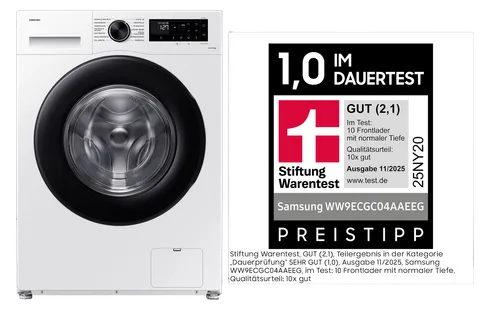
Samsung
WW9ECGC04AAEEG
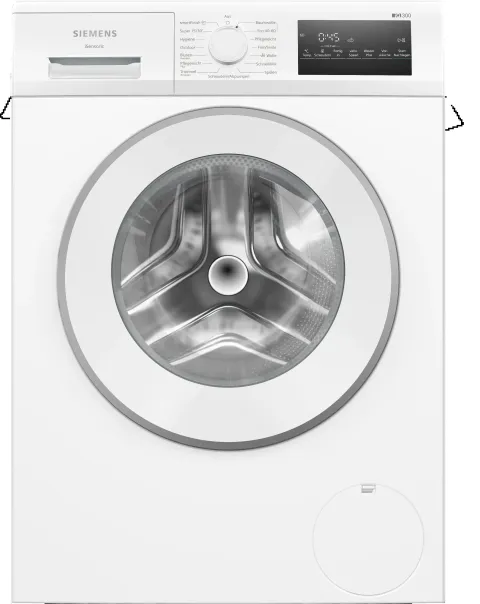
Siemens
iQ300 WM14N22A
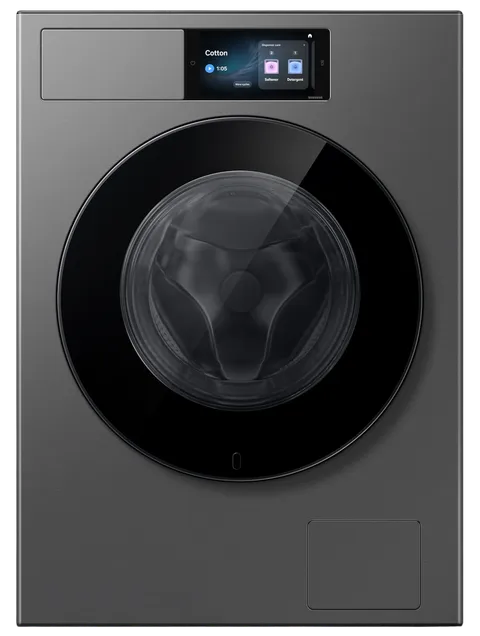
Samsung
Bespoke AI Waschmaschine WF90H/24 mit AI Home, EEK: A (-65%) 9 kg
Bosch
Serie 6 WGG244140
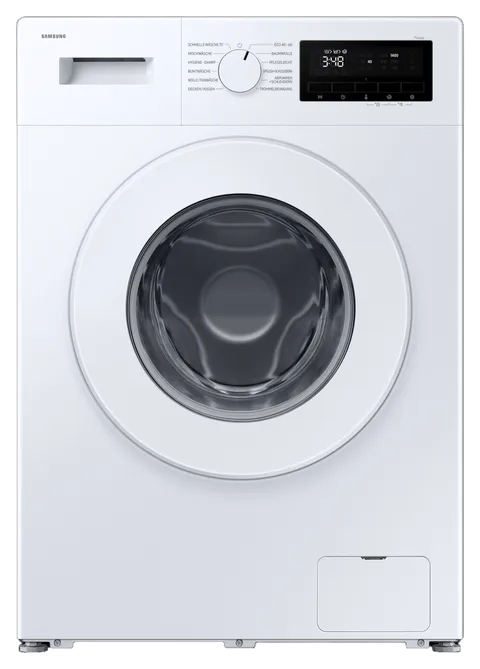
Samsung
WW90FG3M05TWEG
Related categories
Frequently asked questions
If two washing machines have the same energy class and the same spin-noise rating, does the pricier one use less electricity? +
Not reliably. Among the machines in our database tied on A class, 9kg capacity and 72 dB spin noise, the Siemens iQ300 WM14N22A costs 689 EUR and uses 49.4 kWh per 100 cycles, while the cheaper Samsung WW9E CGC04AAEEG costs 529 EUR and uses 44.0 kWh per 100 cycles. The pricier machine here is worse on both price and running cost. Class, capacity and noise rating do not predict which one wins on electricity.
How much does the electricity difference actually cost per year? +
At CompareHomeAppliances' standard assumption of a 0.40 EUR per kWh household tariff and 5 washes a week (260 cycles a year), the gap between the most and least efficient machine in this identically-labeled group works out to 33.70 EUR a year, 51.38 EUR versus 17.68 EUR. Real savings depend on your own tariff and wash frequency.
Does a more efficient washing machine's higher price pay for itself in electricity savings? +
Not within a realistic ownership period, in this comparison. The most efficient machine in the group, the Samsung WF90H09C4ST2, costs 670 EUR more than the cheapest, the Samsung WW9E CGC04AAEEG, but saves only 28.08 EUR a year in electricity. That is about 24 years to earn back the premium through running costs alone, well past a washing machine's realistic working life.
Where can I check a specific washing machine's real energy-per-cycle figure instead of relying on the class letter? +
Check the appliance's own EU energy label or its EPREL registry entry, linked from its product page on this site, rather than trusting the class letter or spin-noise rating on its own. Both are ranges, not fixed figures, so two machines can share a letter and a decibel number while differing sharply underneath.
Sources
More from the blog