Samsung's New AI Washer Claims 70% Beyond Class A
Samsung showed a 10kg/13kg Bespoke AI Washer at IFA 2026, claiming up to 70% less energy than the EU Class A minimum. Still a pre-launch display unit.
By CHA News Desk · Updated 3 September 2026
Researched and drafted with AI language-model assistance from cited public sources, per our AI-content disclosure.
Samsung used its “Samsung CONNECT” exhibition space at IFA 2026, running 2 to 6 September at Humboldt Carré in Berlin, to show a new Bespoke AI Washer lineup in 10kg and 13kg capacities. According to Samsung’s own Newsroom, published in UK and German editions on 2 September 2026, the 10kg model is rated at an Energy Efficiency Index of 15.5, which Samsung says is up to 70% below the minimum energy use allowed for a Class A rating under EU rules. That headline number needs a caveat up front: Samsung’s release describes the units on display as development-stage models with specifications still subject to change, and no date or price for actual sale has been announced.
What did Samsung actually show?
The Bespoke AI Washer comes in two sizes, a 10kg model and a 13kg model. Samsung says the 13kg version uses its SpaceMax technology to pack the extra drum capacity into the same 600mm-deep footprint as a standard European washing machine, so it would not need a larger installation space than machines already sold here. Samsung also displayed a Bespoke AI Refrigerator with an upgraded Family Hub screen, which the company says now includes enhanced AI-based food recognition. No further specifications were given for the fridge in either release.
How is the efficiency claim sourced, and what does it rest on?
For the 10kg model, Samsung cites internal testing of a specific unit, the WF90J/24, and states it is 70% more efficient than the threshold needed to reach a Class A rating under Commission Regulation (EU) 2019/2014. That regulation is the EU’s existing ecodesign law for household washing machines and washer-dryers, the same rule that underpins the A-to-G energy label used across our washing machines pages. In figures, Samsung states an EEI of 15.5, corresponding to 15.3 kWh per 100 wash cycles. Both the English and German releases repeat the 70% figure, though the German version attaches the footnote naming the tested model and regulation; the English version states the claim more simply as “up to 70% less energy than the minimum energy efficiency requirement for a Class A rating.”
Why can’t a shopper buy this yet?
Samsung’s own wording is explicit that these are pre-launch display units. The release states that final testing must still be completed before the washer can be registered in EPREL, the EU’s public energy-label database, and that commercial availability is still to be determined. In practice this means the EEI of 15.5 and the 70% claim are Samsung’s internal test results shown at a trade fair, not a verified public energy label. Until a model appears in EPREL with a registered label, there is no independently checkable figure and no confirmed release date or price for either capacity.
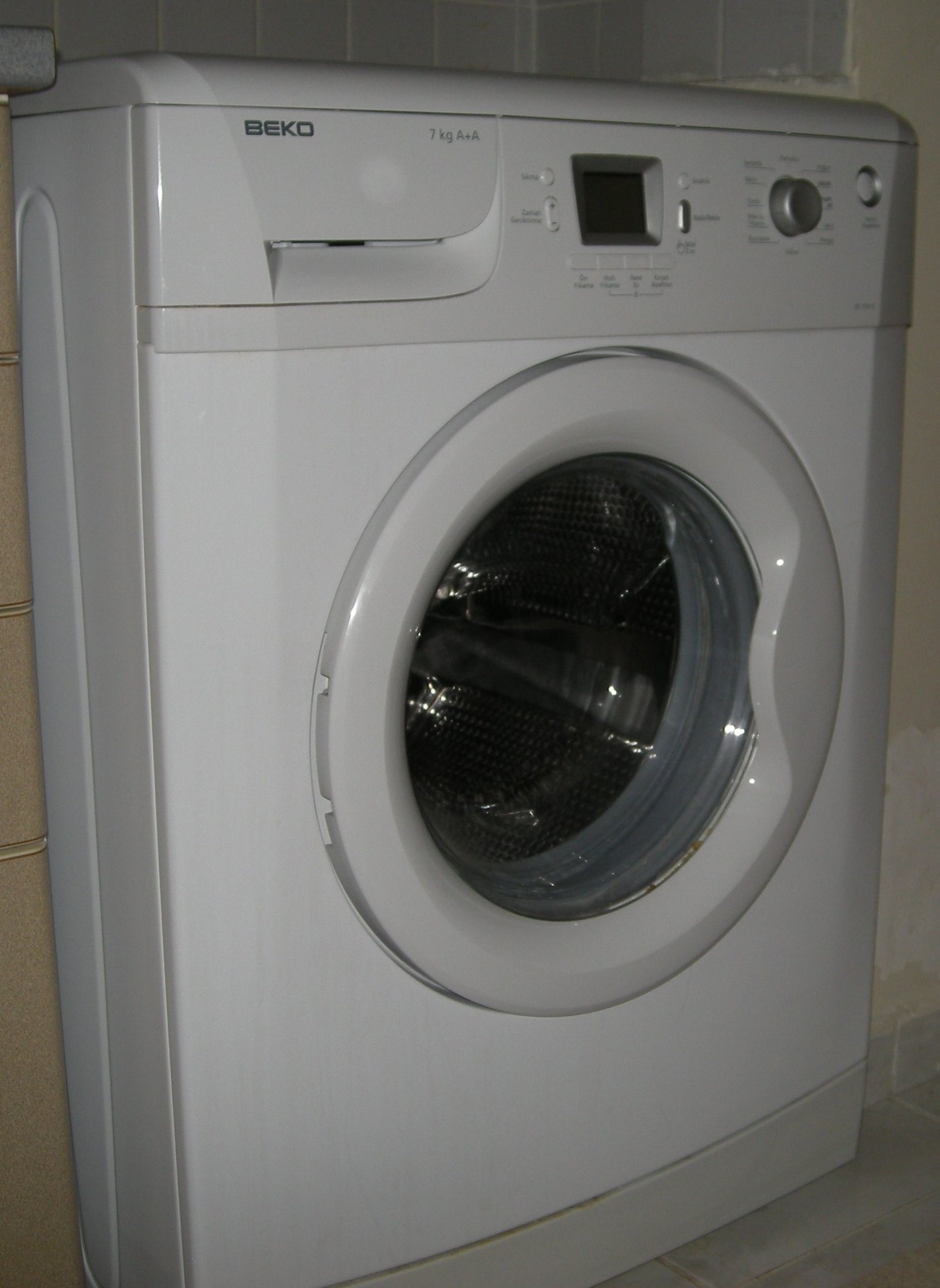
Also worth noting: the photo above is a generic front-loading washing machine used for illustration only, not the actual Samsung Bespoke AI Washer. Samsung has not licensed press photography of the new units for reuse, so no real image of the product accompanies this story.
What did Samsung say about the strategy behind it?
Benjamin Braun, CMO of Samsung Europe, framed the showcase around practical value rather than novelty for its own sake: “AI should deliver tangible benefits that people can see and experience in their everyday lives.” That framing matches how Samsung positioned the washer, refrigerator and the wider Samsung CONNECT space at Humboldt Carré, a venue separate from the main IFA showgrounds.
What should a shopper do with this now?
Treat this as an early look at where EU washing-machine efficiency is heading, not something you can order. The EEI of 15.5 and the SpaceMax 13kg footprint are genuine engineering claims from Samsung, but they carry the manufacturer’s own caveat that specs may still change before EPREL registration. If the efficiency figures hold once Samsung actually lists a model, it would sit well ahead of today’s Class A machines. Until then, the safest move is to keep comparing currently available, EPREL-registered machines on our washing machines pages, and watch for a follow-up once Samsung files a real energy label.
Related categories
Sources
More news